









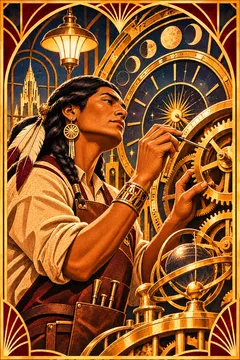

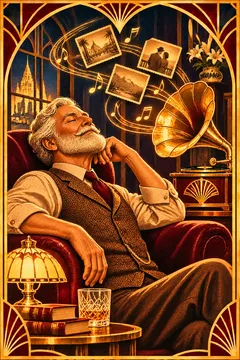










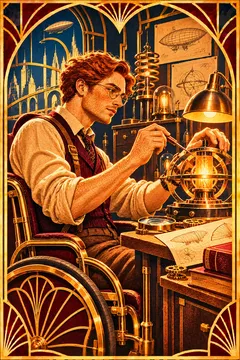











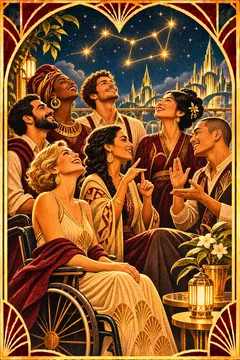

























The 60 cards of the deck. Click a card to see it in full, with its Oracle message.
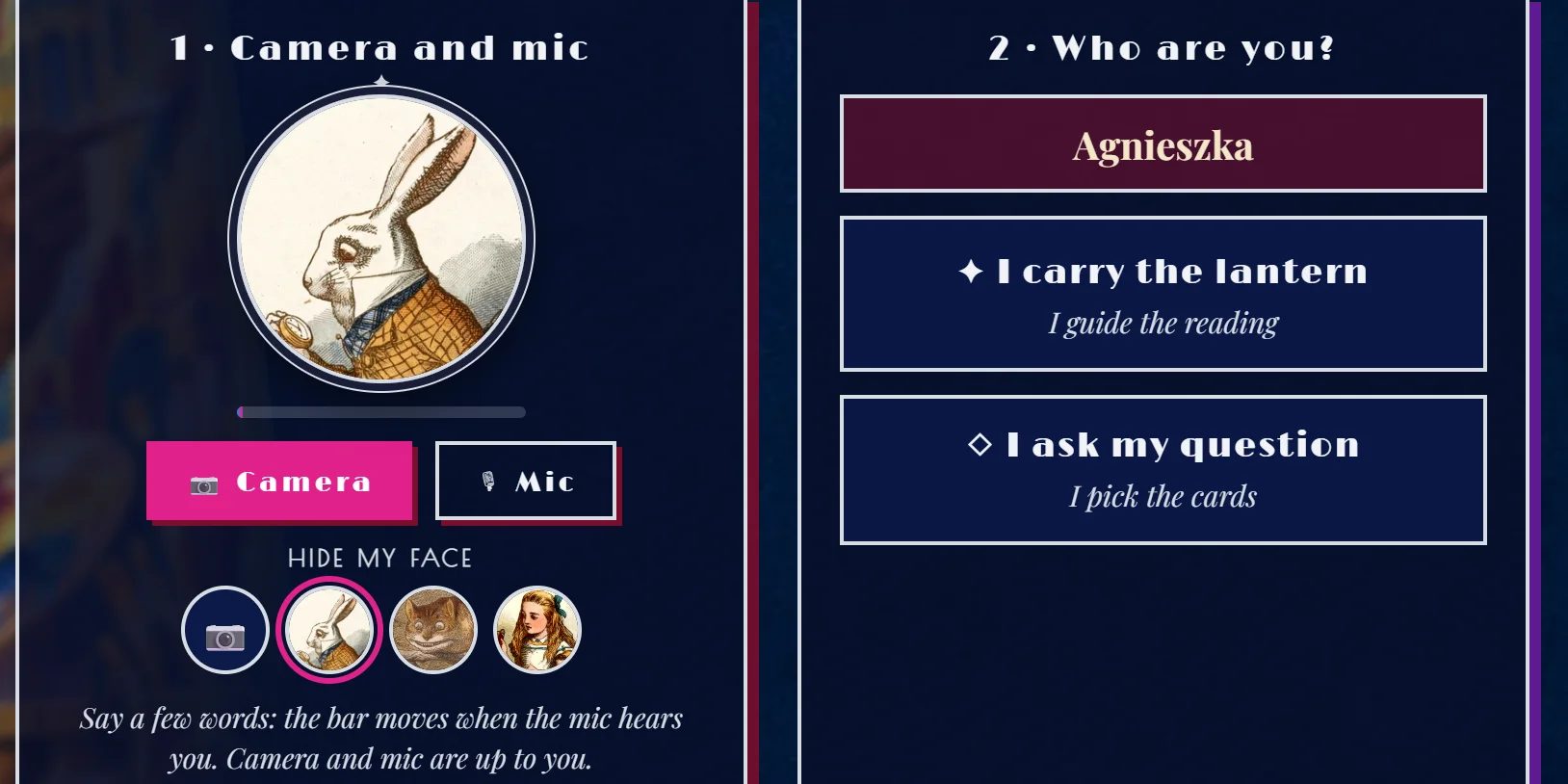
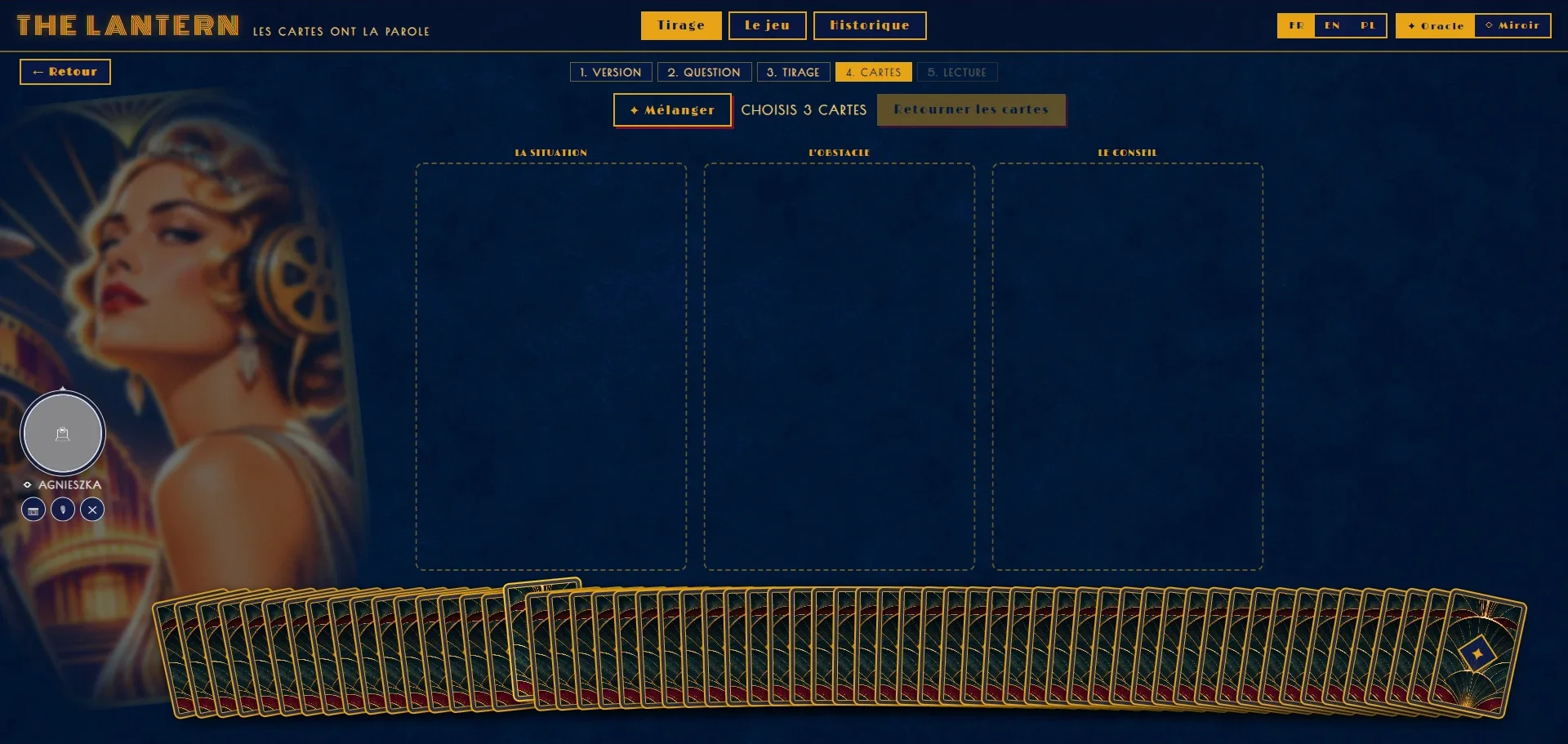
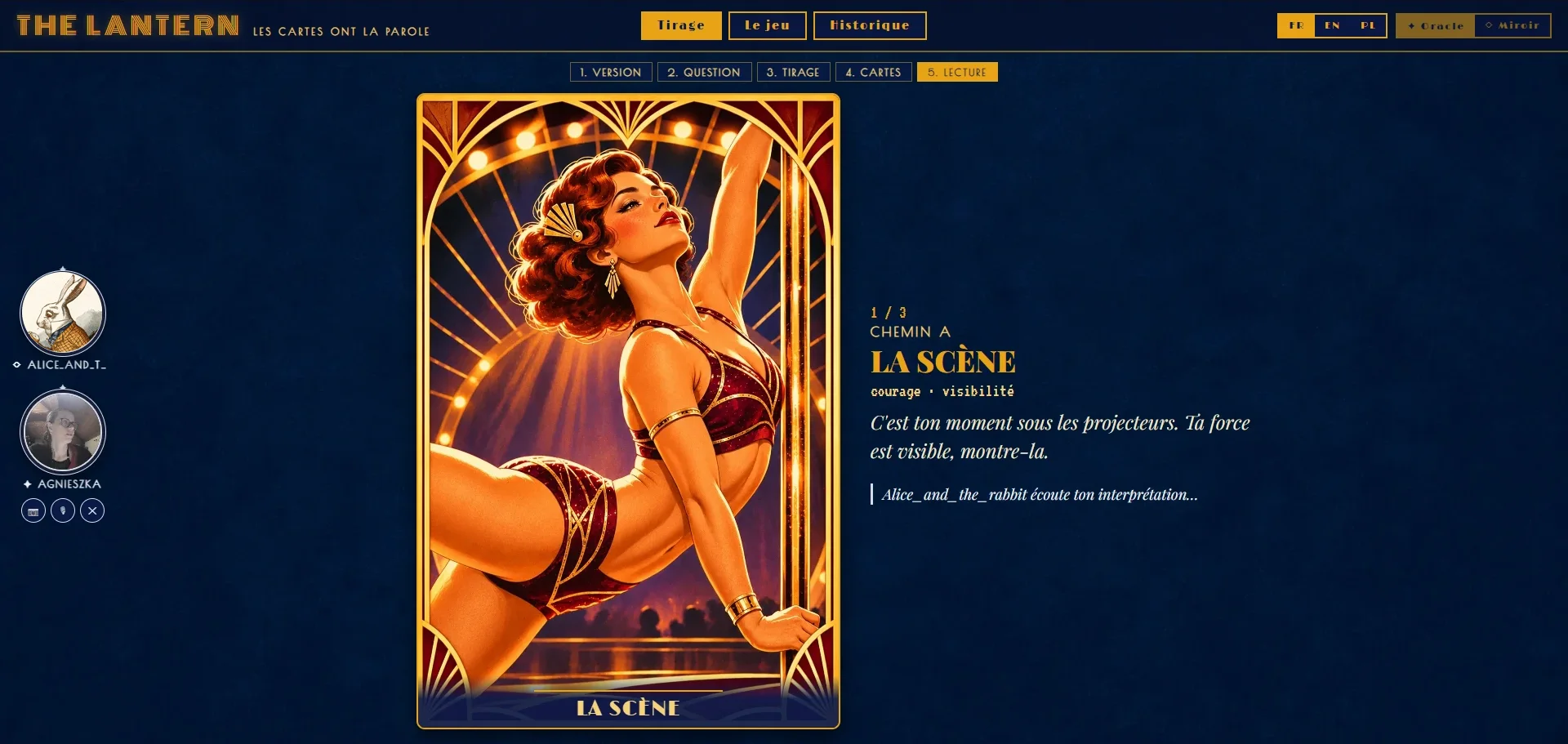
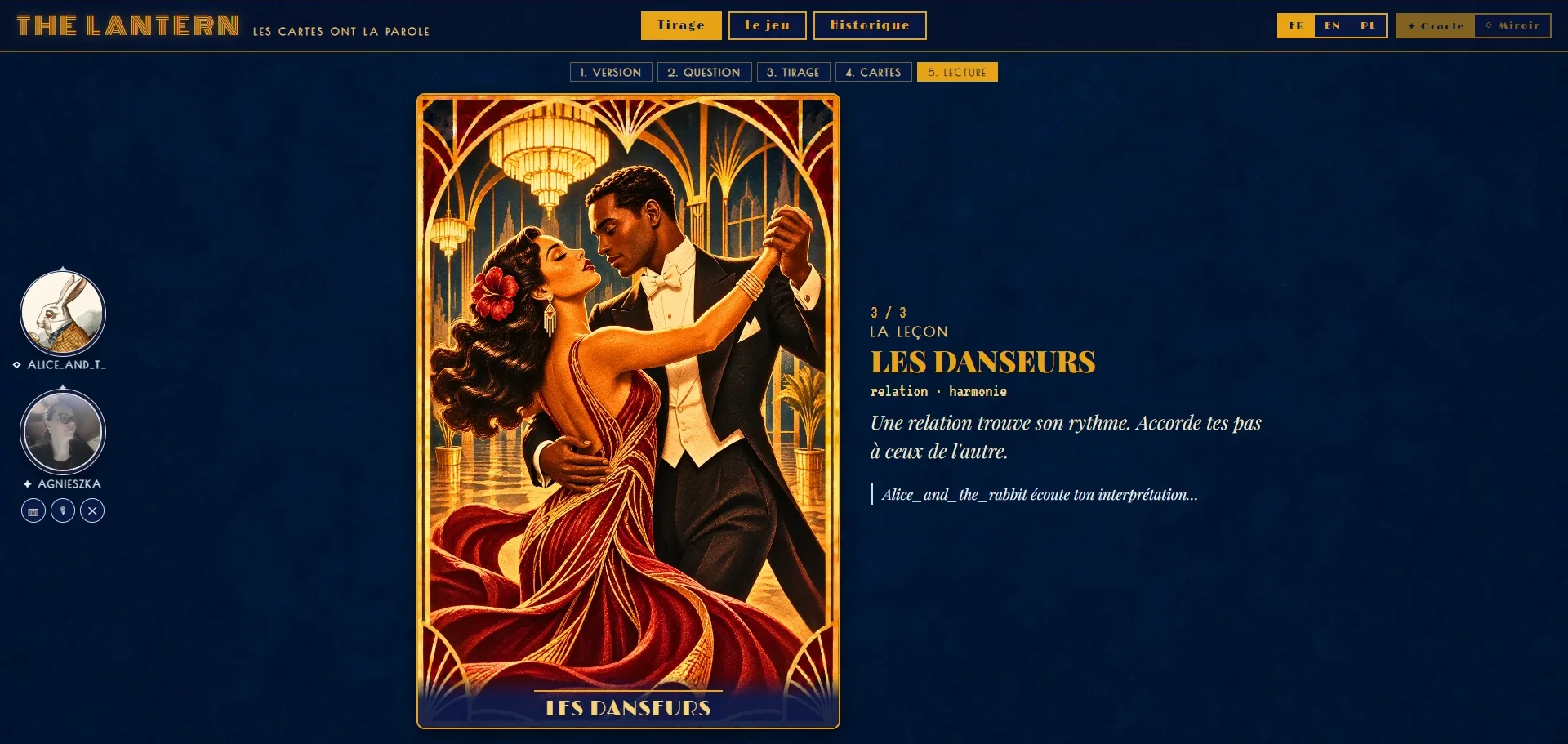
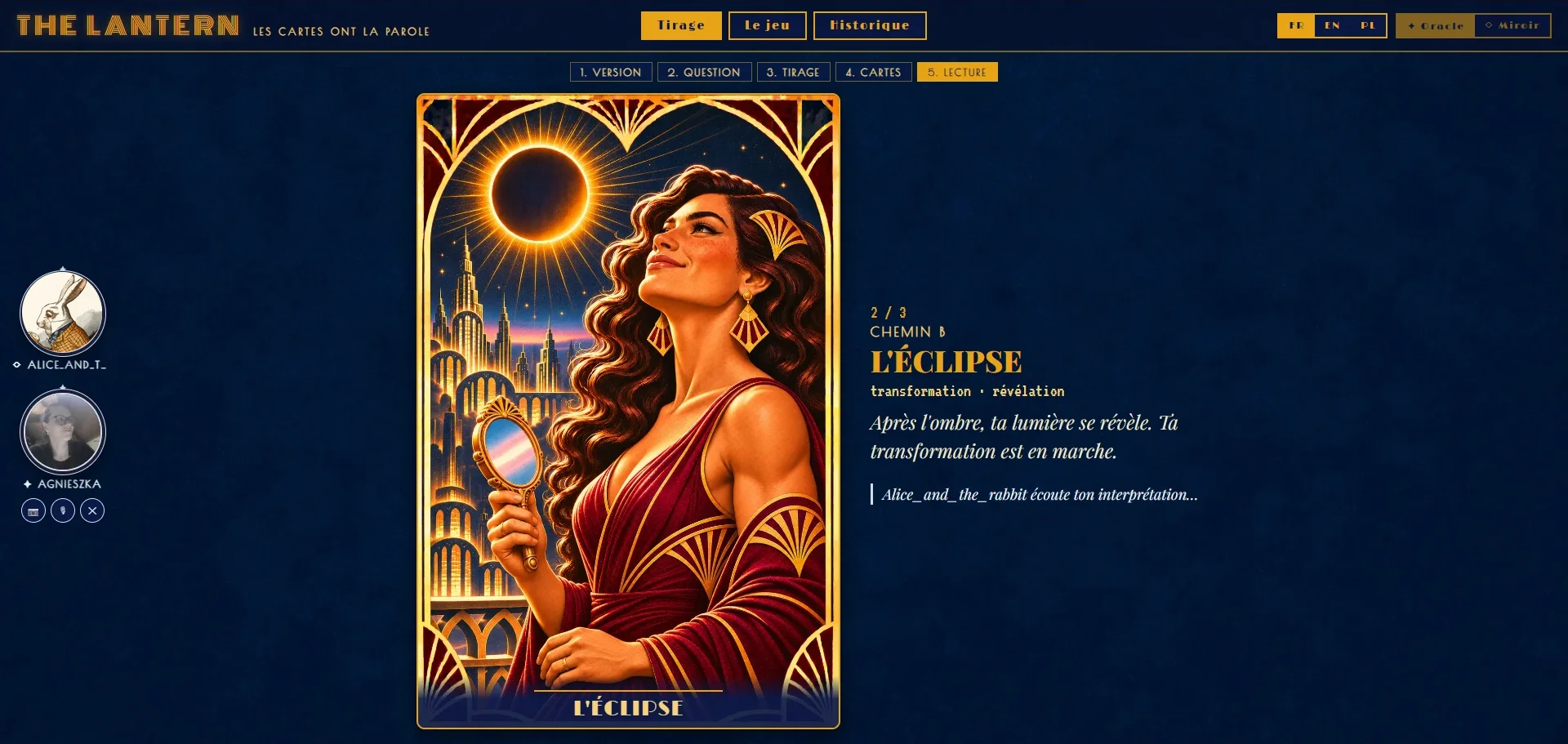
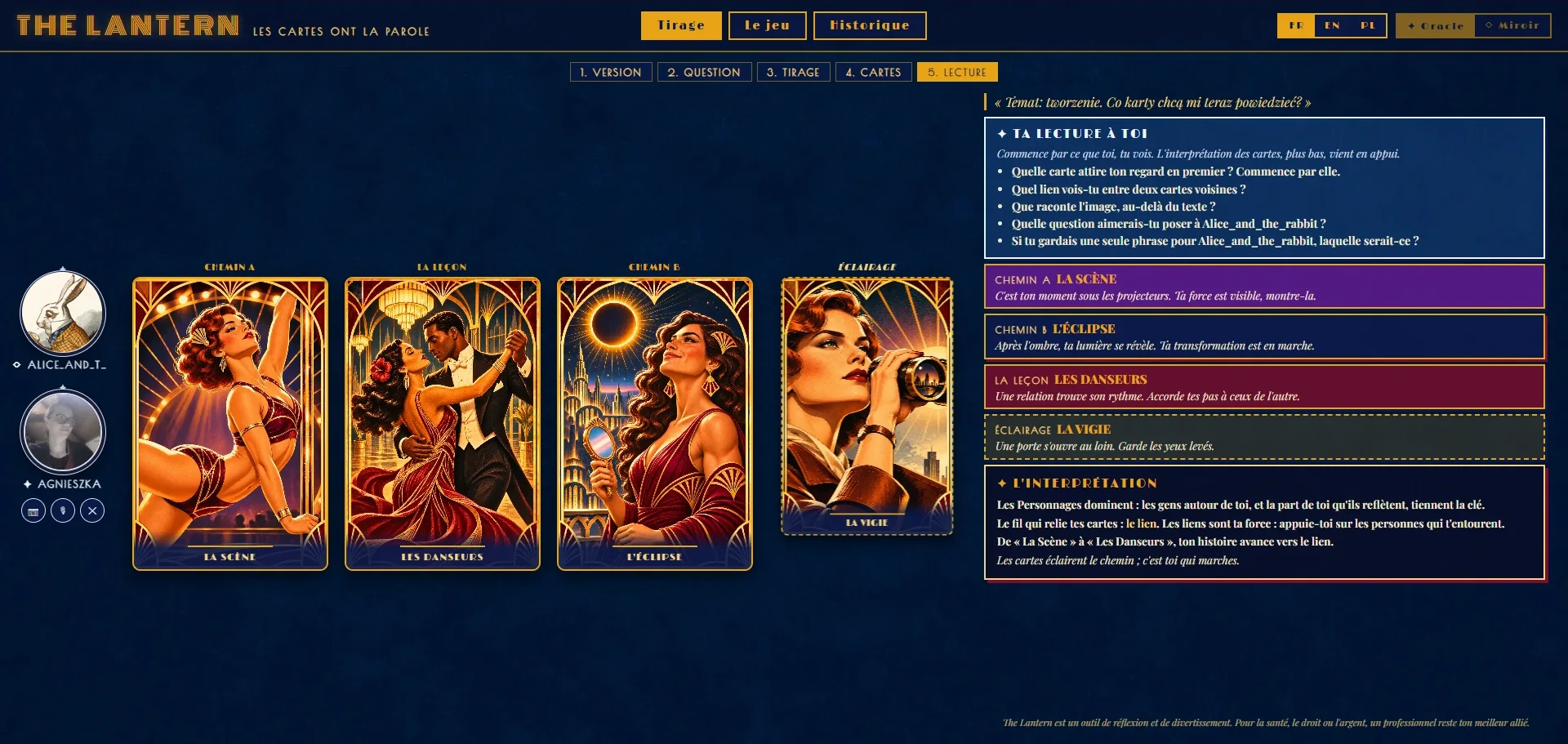
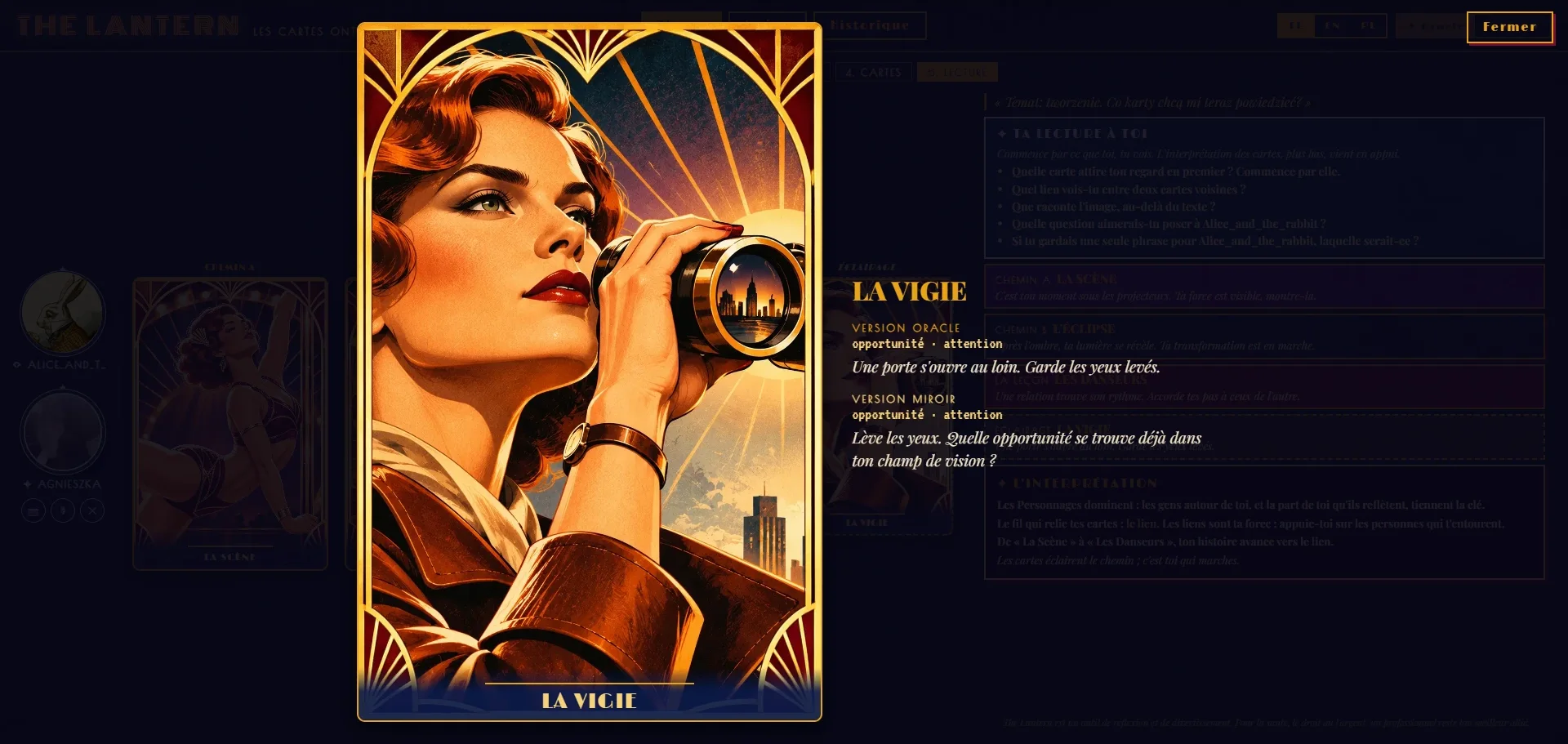
On my phone
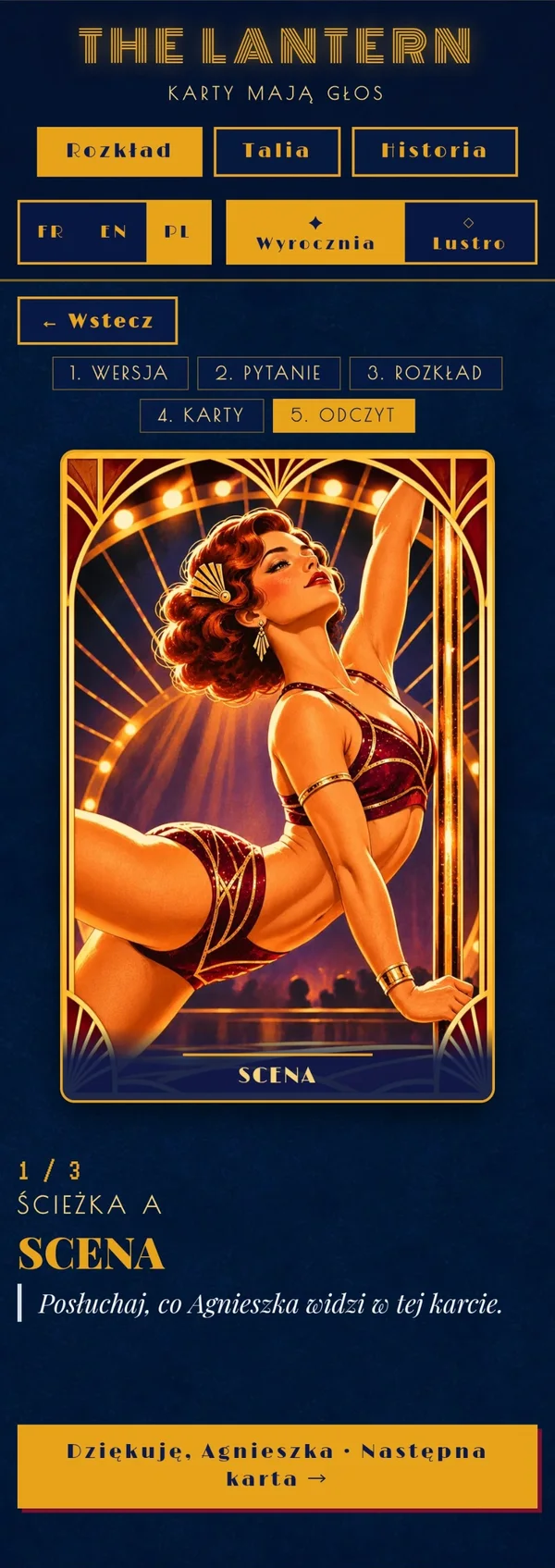
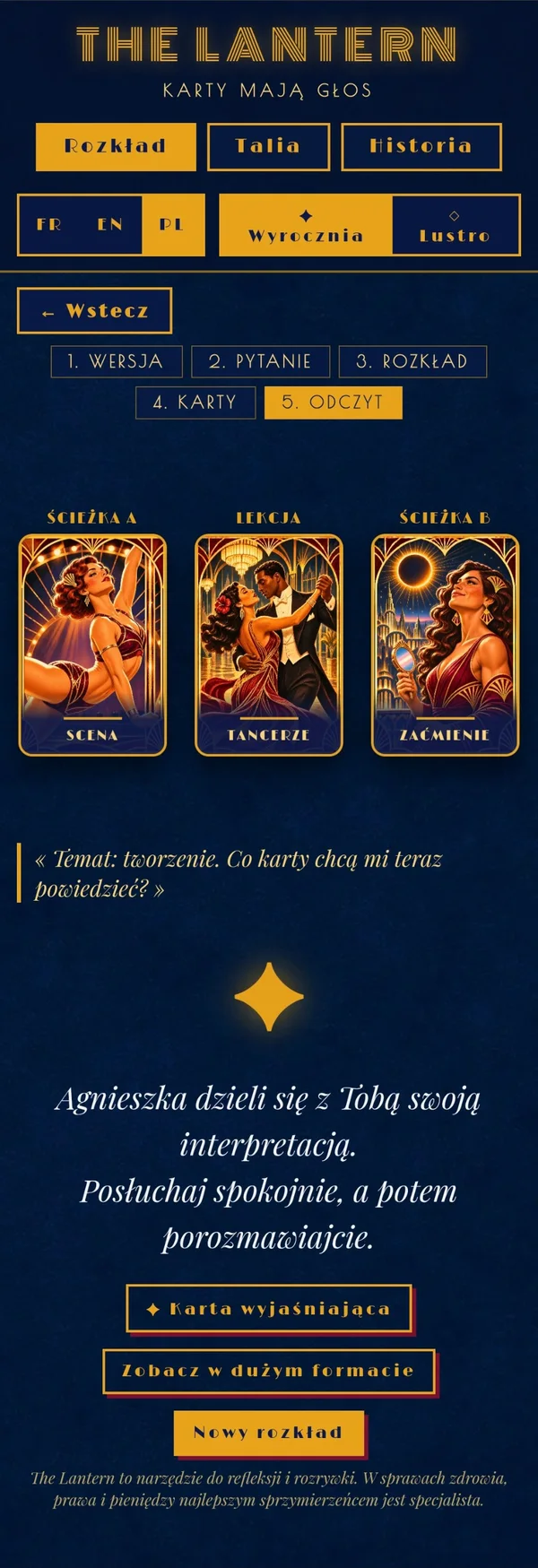
For an evening with the girls, and a conversation that goes a little deeper.
An oracle for those who like messages, a mirror for those who prefer questions, and a table for two.
The Lantern started on the eve of Halloween, at a witch-themed evening with the girls in my pole dance studio. That night, for the first time, someone showed me oracle cards and read my first spread.
I am a very Cartesian person, and I love psychology. During that reading, I noticed that the cards are above all a pretext: a way to get to know yourself a little below the surface, and a wonderful icebreaker. I saw a chance to make them welcoming for Cartesian people too, the ones who prefer a down-to-earth coaching approach to the spiritual side.
That is how The Lantern was born, with two versions in one app. Oracle gives each card a message. Mirror, the Cartesian version, turns each card into a coaching question.
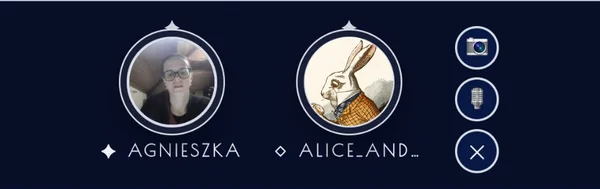
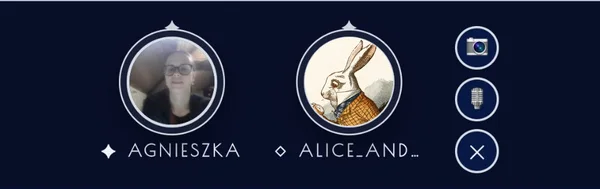
Since the cards are a pretext to connect, the project became my pretext to learn something I had never built before: a live video connection over the internet, linking two people on different devices through camera and microphone. One person carries the lantern and guides the reading, the other asks the question and picks the cards, and both see the same table at the same moment. For privacy, each player can hide their face behind John Tenniel’s Alice, the Cheshire Cat or the White Rabbit from Alice in Wonderland, while the microphone keeps working.
Most of all, The Lantern is a learning lab for LOLO Read, my screen-free reading toy. LOLO Read will soon need images for every word, in every language and at every level, plus cards to cut out. So I learned to automate image production: Claude Code drives image generation in ChatGPT from my own databases of words and scenes, and produces the images in series, ready to file. The 60 cards of The Lantern came out of that automated process: Claude Code produced them in batches, and I chose and approved each batch.
What you find at the table:
- 60 illustrated cards in five families of twelve, with people of many origins, ages, bodies and abilities.
- Eight spreads, from one card to six, plus a highlight card for each reading.
- A guided path in five steps: version, question, spread, cards, reading.
- A question you can write, dictate or keep to yourself, or a card that picks the topic for you.
- Three languages: English, French and Polish.
- A game for two, each player on their own screen, with live video.
- A mobile version, to play on your phone.
Built with HTML, JavaScript and Claude Code, with LiveKit for the live video, online on Vercel. The art direction is mine: a retrofuturistic Art Deco world, and a deck where people of every origin, age, body and ability have their place. Claude Code turned my description of each card into a prompt and sent it to ChatGPT automatically, card after card.
Some digital projects are born in a pole dance studio.
Live in beta: play The Lantern, solo or for two, on a computer or a phone.
15+
Tools
mastered
4
Languages
worked in
100%
Creativity
& growth-focus
Contact me
Let’s find the right way to work together
I focus on what matters to you most
Understanding your vision

Fast & clear communication
Delivering on time

If you’re looking for someone to build with AI, freelance or full‑time
- Daily user and trainer on Claude (Anthropic), with no-code stacks like Lovable, WordPress, Notion and Make
- Anthropic Academy certified: Introduction to Agent Skills and Claude Code in Action (March 2026)
- Fluent in English, French, Polish and Spanish (written), with live training in English, French and Polish
- Already shipping real-world projects and ready to ship yours

The full picture: my story, my skills, and where to reach me
- A few words about me: how I think, and why I build
- My résumé: background, skills and experience at a glance
- My LinkedIn: let’s connect and stay in touch
- Open to freelance projects and full‑time roles, worldwide